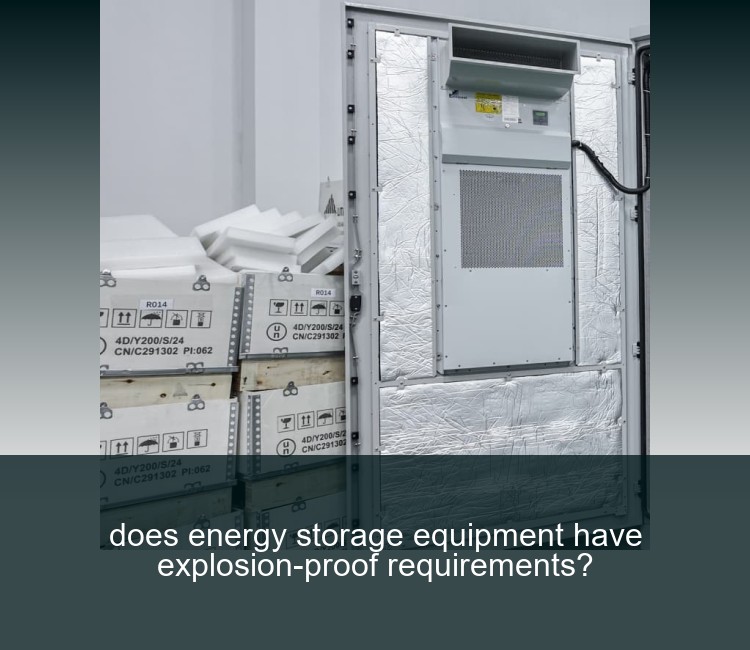
Does NFPA 855 require explosion protection?
The fire codes (IFC Chapter , NFPA 855 ed. ) contain a requirement to include explosion protection for installed systems exceeding certain energy capacity thresholds.
Is hydrogen accumulating during battery operation a fire & explosion safety concern?
From a fire and explosion safety perspective, the primary concern is the potential accumulation of hydrogen during battery operation, which requires careful monitoring and management.
Why are explosion hazards a concern for ESS batteries?
For grid-scale and residential applications of ESS, explosion hazards are a significant concern due to the propensity of lithium-ion batteries to undergo thermal runaway, which causes a release of flammable gases composed of hydrogen, hydrocarbons (e.g. methane, ethylene, etc.), carbon monoxide, and carbon dioxide.
Should deflagration venting be used as passive explosion protection?
In general, using deflagration venting as passive explosion protection in addition to an active system has multiple benefits due to the nature of the battery failure event, which involves a rapid release of flammable gases.
Are battery storage systems dangerous?
There has been a fair amount of news about battery storage systems being involved in fire and explosion incidents around the world. Do not forget that these are not the only safety issues when dealing with batteries. Battery systems pose unique electrical safety hazards.
How does ESS design affect fire and explosion safety?
Several competing design objectives for ESS can detrimentally affect fire and explosion safety, including the hot aisle/cold aisle layout for cooling efficiency, protection against water and dust ingress into the enclosure, and the use of larger cells with increased energy density.
NFPA 70E Battery and Battery Room Requirements | NFPA
There has been a fair amount of news about battery storage systems being involved in fire and explosion incidents around the world. Do not forget that these are not the
Battery Energy Storage System (BESS) fire and
A significant standard in the US is UL , which addresses the safety of energy storage systems and equipment. This comprehensive standard covers various aspects of BESS safety, including installation
Explosion Control Guidance for Battery Energy Storage
EXECUTIVE SUMMARY grid support, renewable energy integration, and backup power. However, they present significant fire and explosion hazards due to potential thermal runaway
Explosion-proof standards for battery energy storage cabinets
Both the exhaust ventilation requirements and the explosion control requirements in NFPA 855, Standard for Stationary Energy Storage Systems, are designed to mitigate hazards associated
Understanding NFPA 855 Standards for Lithium
In commercial and industrial settings, energy storage systems must meet stringent safety standards to protect assets and personnel. NFPA 855 provides a framework for addressing risks in large
Explosion Control of Energy Storage Systems
The fire codes (IFC Chapter , NFPA 855 ed. ) contain a requirement to include explosion protection for installed systems exceeding certain energy capacity thresholds.
Energy Storage | UL Standards & Engagement
This comprehensive standard covers electrical, mechanical, and fire safety requirements for stationary energy storage systems and equipment. Recent updates address explosion control, thermal runaway prevention, and
How to Achieve Explosion Control in Energy Storage Systems
To prevent an explosion within an ESS, NFPA 855 states that flammable gas concentrations must not exceed 25 percent of the Lower Flammability Limit (LFL) where gas may accumulate.
BESS Safety: Fire and Explosion Protection
This article outlines the key safety measures for thermal runaway protection, including explosion venting design and fire-rated wall construction, to ensure system safety.
Energy Storage NFPA 855: Improving Energy Storage
The focus of the following overview is on how the standard applies to electrochemical (battery) energy storage systems in Chapter 9 and specifically on lithium-ion (Li-ion) batteries.
What Are the Requirements for Explosion-Proof
Explosion-proof equipment is designed to prevent the ignition of flammable gases, vapors, or dust, providing a safe operational environment in hazardous areas.
Does the flywheel energy storage equipment have explosion-proof
Is a flywheel energy storage system a burst containment? The housing of a flywheel energy storage system (FESS) also serves as a burst containment in the case of rotor failure of
Battery Energy Fire Explosion Protection
Battery Energy Storage Systems Fire & Explosion Protection While battery manufacturing has improved, the risk of cell failure has not disappeared. When a cell fails, the main concerns are
Intrinsically Safe Explosion-proof System and
Considering the energy storage elements of field equipment, the field equipment in the explosive gas hazardous environment should be designed according to the requirements of intrinsically safe explosion
When to Choose Intrinsically Safe vs. Explosion
Explosion-proof equipment suits high-energy settings like chemical plants, where containing potential explosions is necessary. Evaluate Costs and Maintenance: Intrinsically safe systems generally offer
Battery Energy Storage System (BESS) fire and
The gravity of these consequences highlights the urgent need to implement strong fire and explosion prevention measures in BESS. The industry has a responsibility to understand the complexities of these systems and ensure
Understanding Positive Pressurized Containers for
In industries where explosive or flammable materials are prevalent, ensuring the safety of equipment and personnel is of utmost importance. Positive pressurized containers are designed to meet the
Explosion-proof standards for battery energy storage cabinets
Why do energy storage containers, industrial and commercial energy storage cabinets, and energy storage fire protection systems need explosion-proof f y oil-damped door closers,
Lithium batteries in hazardous locations: ATEX and
The ATEX 114 "equipment" Directive /34/EU that relates to equipment and protective systems intended for use in potentially explosive atmospheres. The ATEX 137 "workplace" Directive /92/EC
Understanding Certification and Markings for
Equipment is evaluated to determine conformity to general safety requirements and explosion protection concepts, such as non-arcing/sparking, explosion-proof/dust ignition proof, intrinsic safety,
When to Use Intrinsically Safe vs. Explosion-Proof Equipment
What is Intrinsically Safe Equipment? Intrinsically safe equipment is designed to prevent any sparks, electrical arcs, or heat that could ignite hazardous gases or dust in explosive
General requirements for explosion-proof product design
9, Logo There should be a general marking of "Ex" or "Ex explosion-proof level temperature group" on the obvious part of the explosion-proof electrical equipment casing. Explosion proof
Explosion Proof Battery | Safety & Compliance Solutions
Safe & certified explosion-proof battery system. IECEx & ATEX compliant, ensuring reliable power & cost-effective solutions for hazardous environments.
What determines the need for an explosion proof room?
Does that mean you’re supposed to assume every room requires explosion proof equipment until an engineer says it doesn’t, or the opposite? Seems like an opportunity to miss something.
When to Use Intrinsically Safe vs. Explosion-Proof Equipment
What is Intrinsically Safe Equipment? Intrinsically safe equipment is designed to prevent any sparks, electrical arcs, or heat that could ignite hazardous gases or dust in explosive
Explosion Proof Battery | Safety & Compliance
Safe & certified explosion-proof battery system. IECEx & ATEX compliant, ensuring reliable power & cost-effective solutions for hazardous environments.
What determines the need for an explosion proof room?
Does that mean you’re supposed to assume every room requires explosion proof equipment until an engineer says it doesn’t, or the opposite? Seems like an opportunity to miss something.
Understanding Explosion Proof Standards
Explosion-proof standards ensure that equipment used in hazardous environments can operate safely without igniting flammable substances. These standards are essential for industries like oil and gas,
FIRE AND EXPLOSION PROTECTION FOR BESS
The NFPA 855 standard, which is the standard for the Installation of Stationary Energy Storage System provides the minimum requirements for mitigating the hazards associated with ESS.
Combustible Dust: An Explosion Hazard
State Plans are required to have standards and enforcement programs that are at least as effective as Federal OSHA and may have different or more stringent requirements. If a hazard
Requirements for electrical installations in
Enclosures of explosion-proof equipment should be made of chemical-resistant materials, and protective coatings are additionally recommended. Moisture – Moisture can penetrate electrical installations, leading to short
Standards for Explosion-Proof Ventilation
Discover key explosion-proof ventilation standards, safety regulations, and best practices for industrial fans, blowers, and hazardous environments.
UL : Energy Storage Systems and Equipment
UL : Energy Storage Systems and Equipment As stated in the previous section, UL is the system level safety standard for ESS and equipment. Different components within the ESS
Discussion & Message Board
Comments saved locally (demo). Replace with server endpoint for production.